Project
Our seeds – We reap what we sow
Zeitlupe, Ahrensburg
Projekt
Unser Saatgut – Wir ernten, was wir säen
Zeitlupe, Ahrensburg
Profile
Organisation/Company
Zeitlupe, Ahrensburg
Project name
Our seeds – We reap what we sow
Project period
01.03.2024 – 01.03.2027
Project gallery
Project partner
“Die Zeitlupe” (“Slow Motion”) is a charity dedicated to the preservation of endangered cultural heritage and assets. Its main focus is on collections of images, words and landscapes. Over the years, it has created numerous projects that have attracted nationwide acclaim and support. In all areas, the charity is particularly interested in cooperation with experts who offer support in the form of specialist knowledge.
Project description
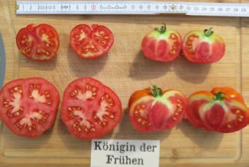
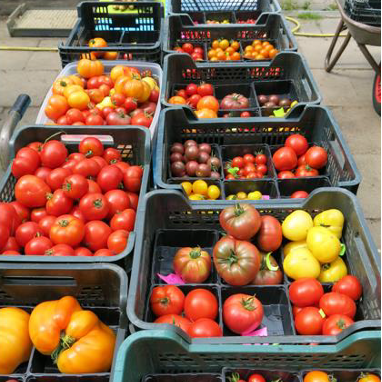
Dr. Joachim Pohlmann, a botanist who studied open-pollinating plant varieties for more than 30 years, bequeathed his seed archive to the charitable organisation “Durch Erleben lernen e.V.” (“Learning From Experience”)“ following his death in summer 2021. The archive currently contains more than 400 varieties of tomato, paprika and chili peppers.
In order to maintain this diversity, 60 varieties with at least 6 plants are grown for selection and seed production every year. At the same time, a documentation platform is being created that – if all goes according to plan – also has the potential to become a work of reference for consumers, as seeds are a field which requires a critical discussion of new cutivars. This critical approach will also be facilitated by the creation of consumer information material.
Project aim
- Preservation of 400 tomato varieties.
- Documentation platform for seeds.
- Long-term stability of the project – collaboration with institutions/institutes; public relations; educational activities.
Project status
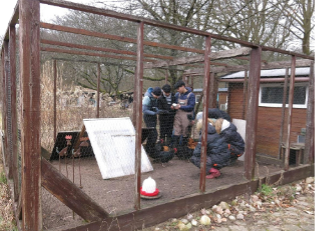
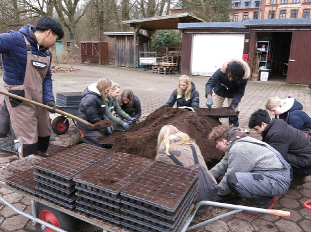
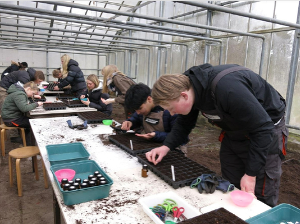
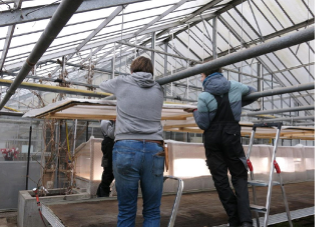
The project is on schedule. Here are some impressions from the first quarter of 2025.
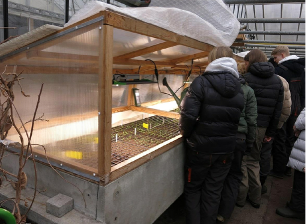
A new “tomato reproduction year“ has begun. The seminar group of 16 schoolchildren was given the opportunity to make a decisive contribution to protecting biodiversity and preserving a piece of agricultural heritage. An informative tour of the site was followed by an introduction to the day’s topic: the importance of preserving old varieties of tomato. The students learned about how each variety possesses a unique combination of characteristics which have been adapted to specific regions and growing conditions over several generations. They discovered that these varieties are much more than just carriers of genetic materials; they are silent witnesses of the agricultural practices of our forebears and a reflection of biological diversity. The students found out that the genetic richness of old tomato varieties often means that they have superior taste profiles, greater adaptability to local climate and soil conditions, and increased resistance to certain diseases and pests. These essential characteristics help to guarantee the sustainability of plant production in the face of climate change and altered environmental conditions.
This early part of the year was the right time to start cultivation of chili and paprika varieties, and the students gained practical knowledge in the careful labelling and handling of the plants. A high level of accuracy and care are required to ensure the preservation of cultivars.
The students were actively involved in the selection of tomato varieties to be planted and used for seed production. As in the past, some 60 varieties will be reproduced and preserved this year.